 Image 1 of 1
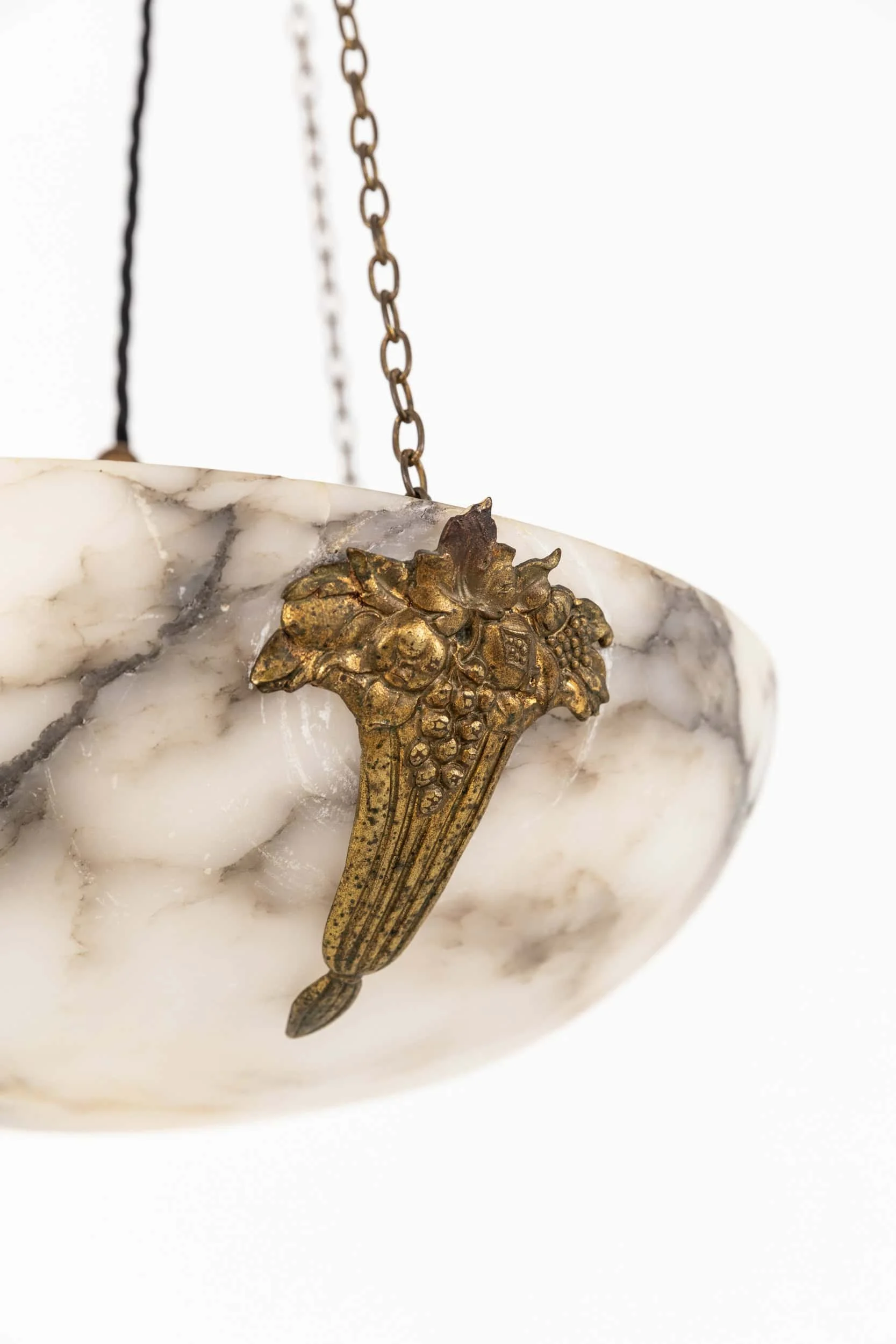
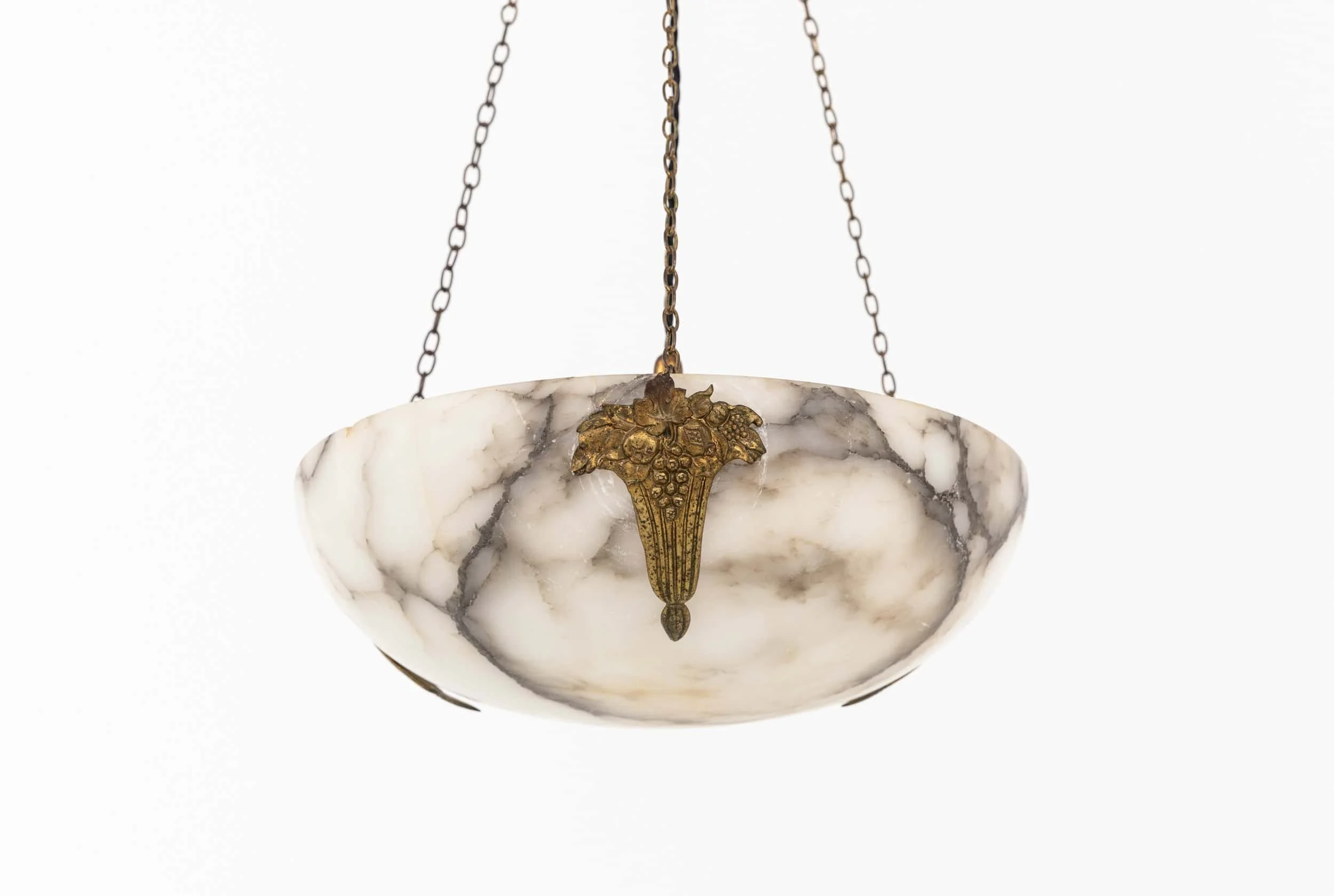
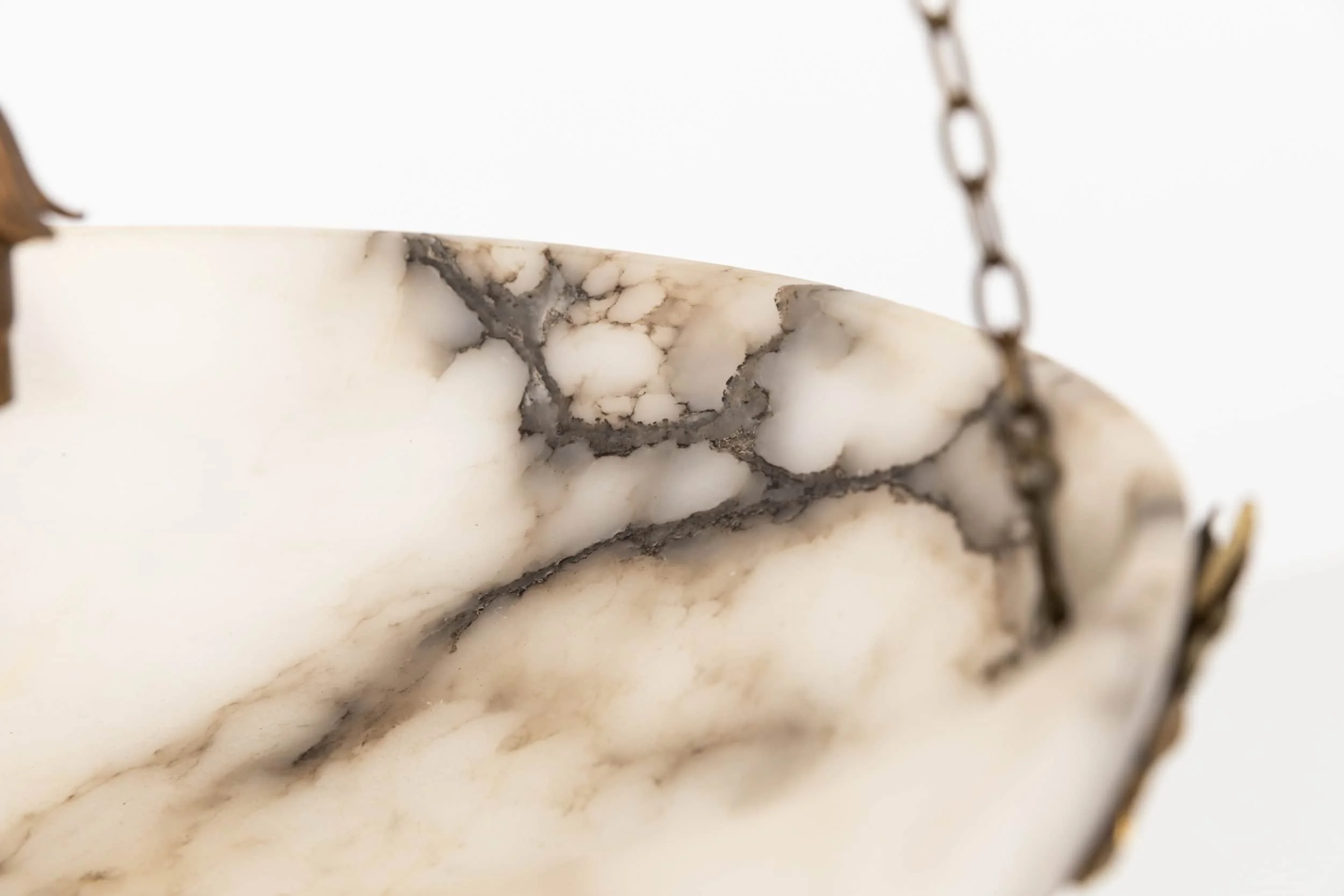
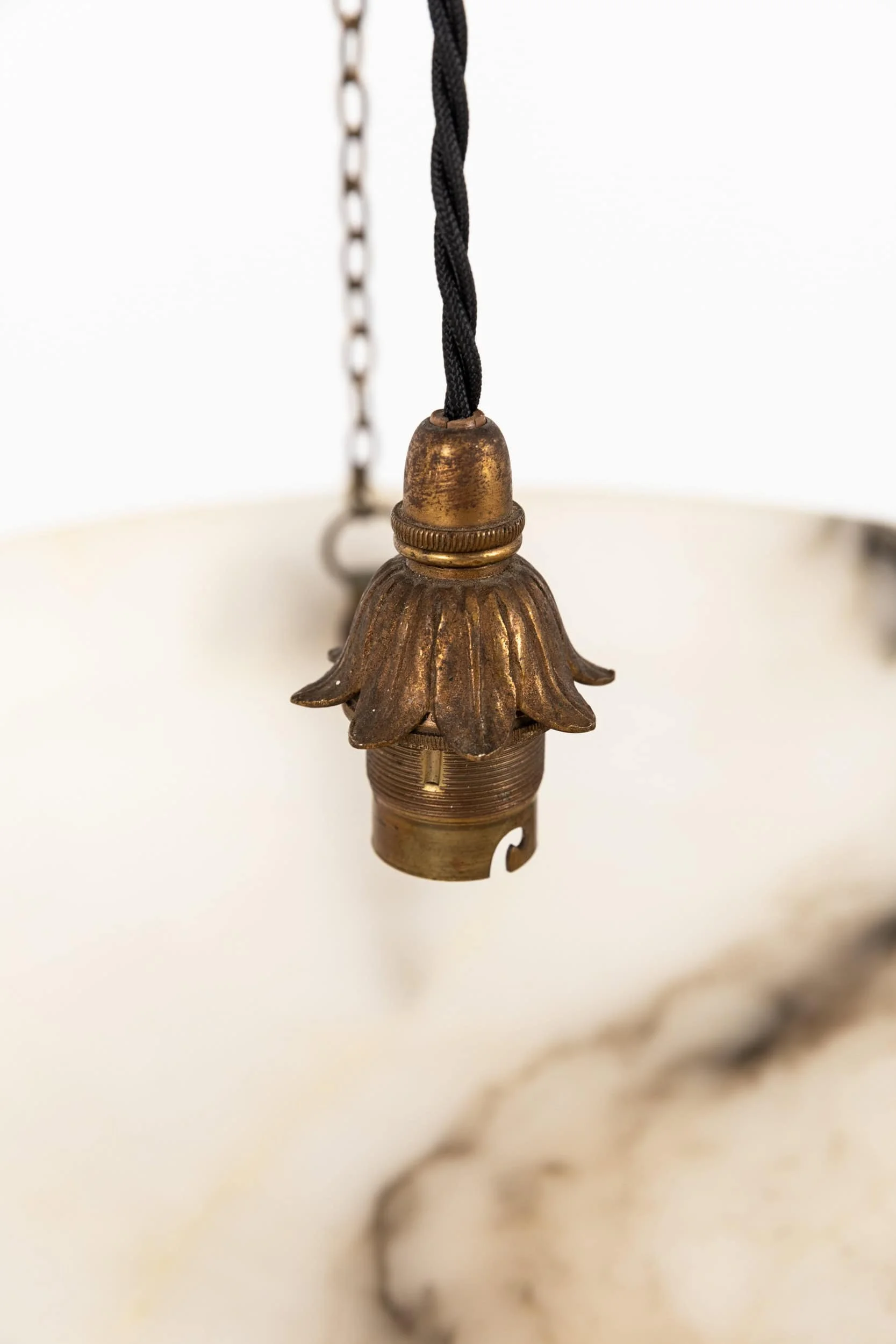
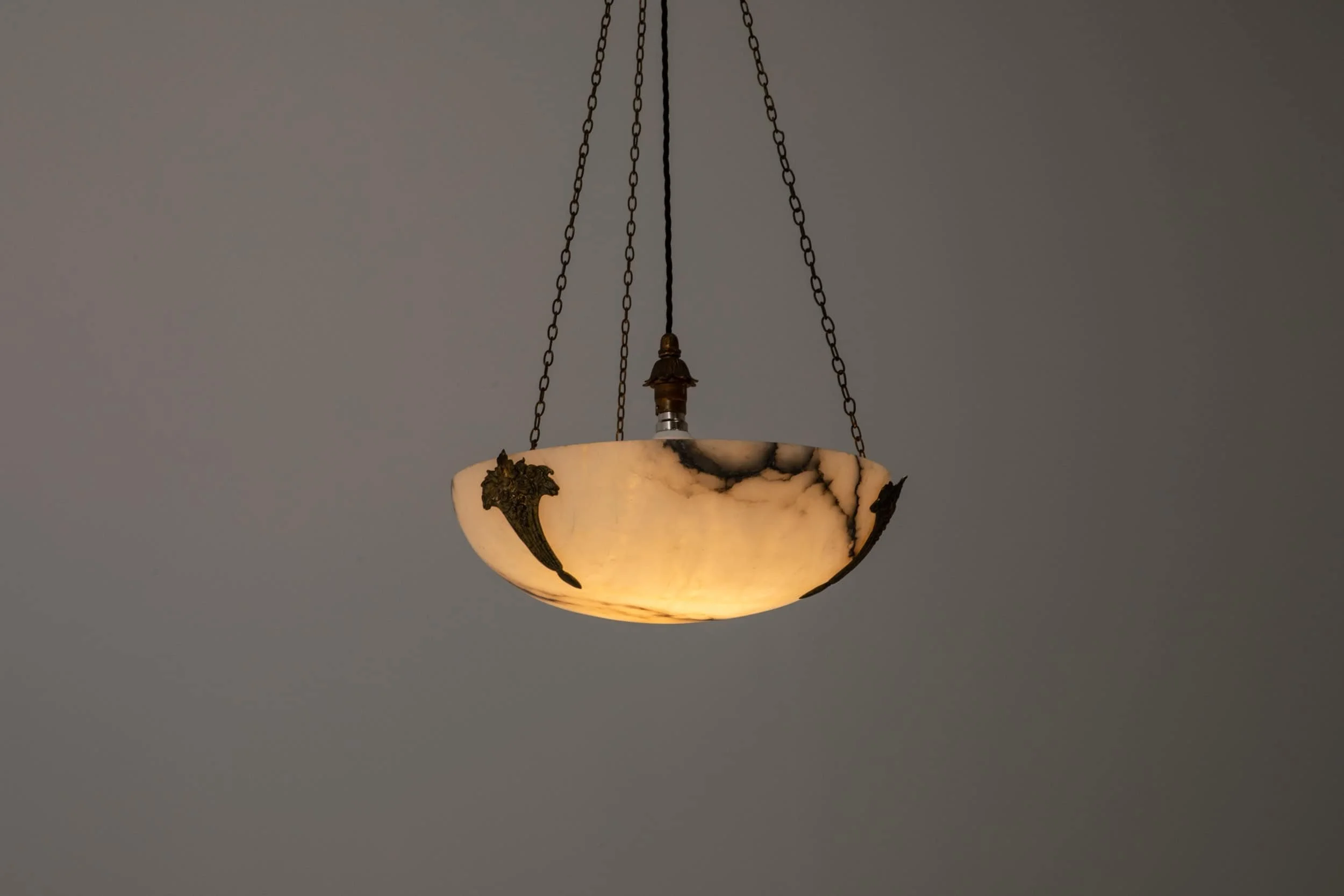
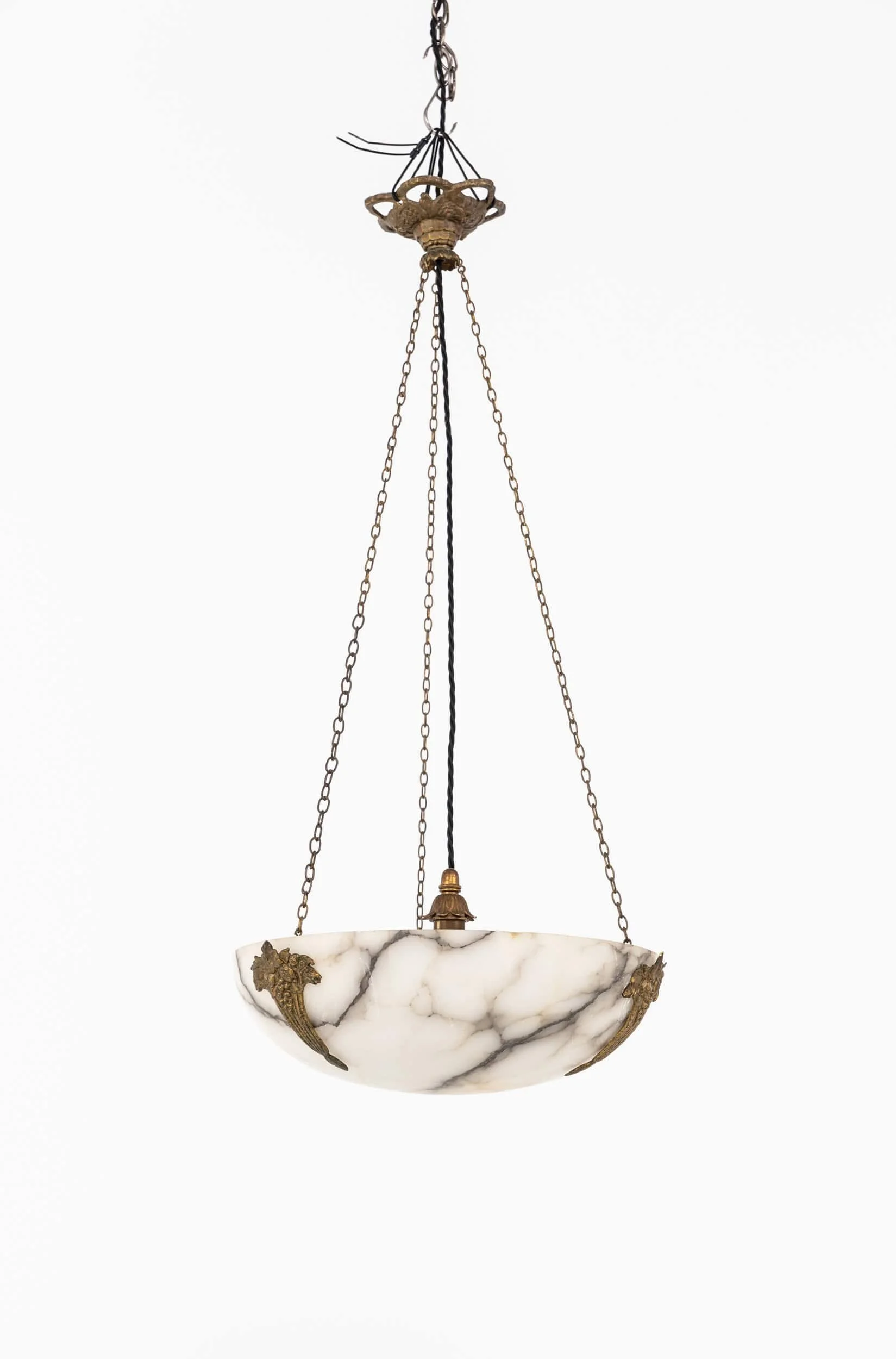
Alabaster found a quiet renaissance in the early 20th century, especially in plafonnier and pendant lighting, where its natural translucency became a defining aesthetic. Unlike glass, alabaster diffuses light through its mineral body, giving a soft, velvety glow with subtle clouding and veining that designers of the period prized for its atmosphere.
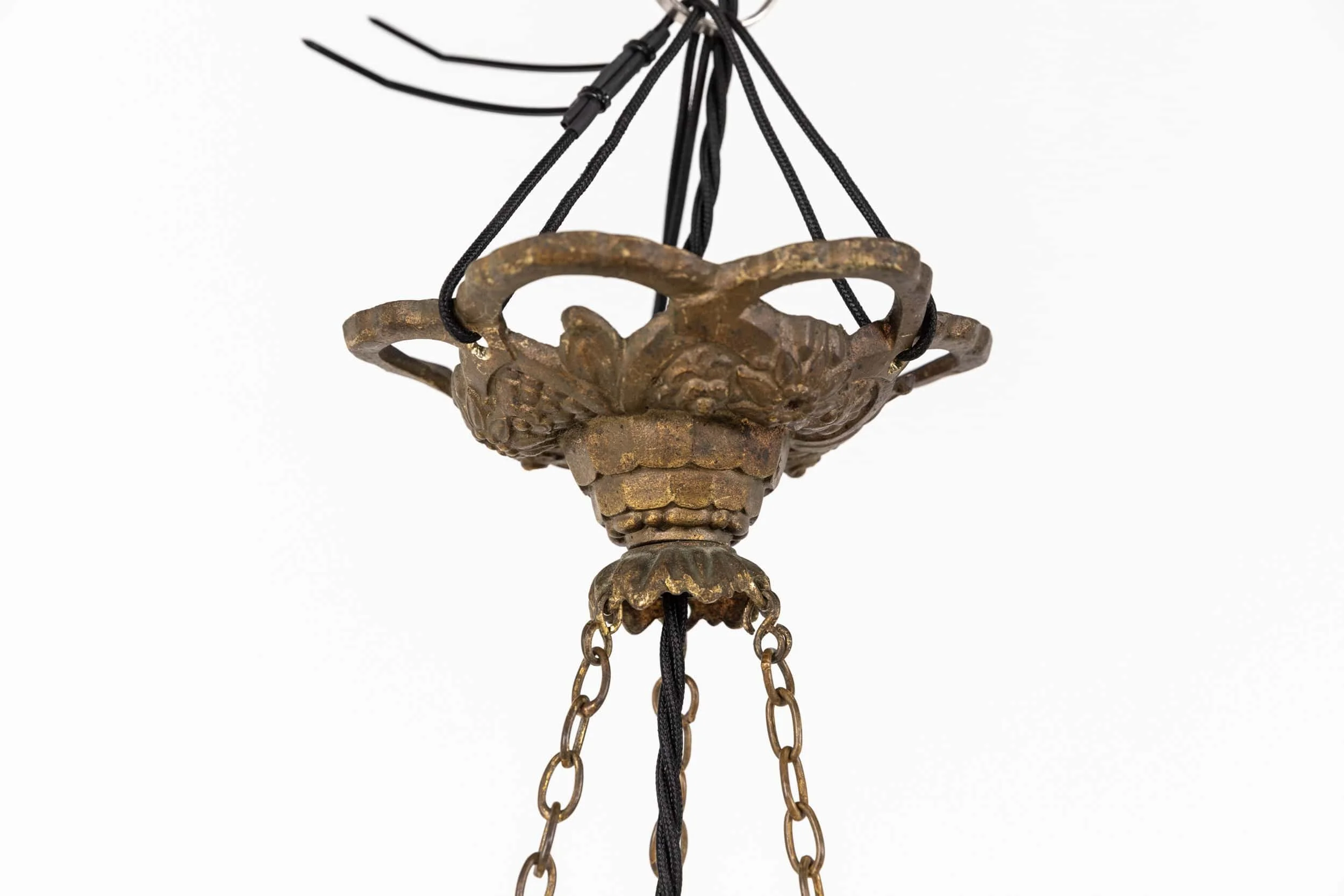
By the 1910s–1930s, workshops in France, Italy, and Austria were producing carved alabaster bowls for Art Deco and late‑Belle Époque interiors, often suspended on silk cords or fine chains. The material’s ability to be turned, lathe‑shaped, and hand‑carved made it ideal for shallow dishes and domed plafonniers, and its warm tone complemented bronze, gilt metal, and patinated iron mounts.
Though fragile and sensitive to heat, alabaster became a hallmark of refined decorative lighting, bridging traditional craftsmanship with the emerging modernist taste for quiet, sculptural forms.
Dimensions
Diameter: 350mm
Height: 780mm
Weight: 2kg